
The Pop-Up Strategy You've Been Missing
A better popup strategy goes beyond email capture. Collect useful zero-party data, improve segmentation, and connect customer identity across your marketing stack.
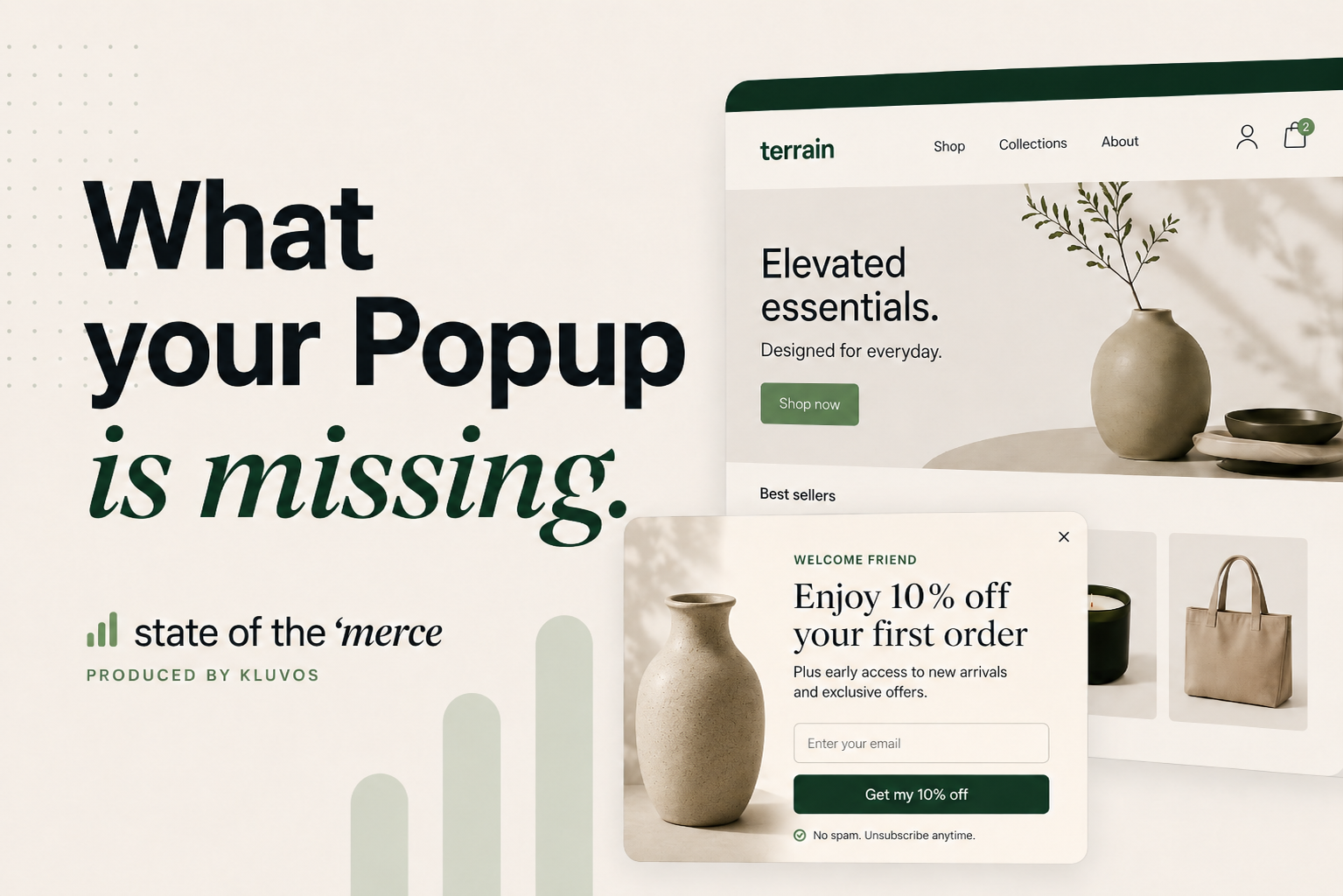
Most ecommerce stores use popups for the same basic reason: to turn site visitors into contacts you can reach again without paying for every new impression.
Now, you have to pay a subscription fee for your ESP, but it’s not like running an ad. Once someone opts in, you have a direct way to reach them again through your own marketing channels. That’s what makes the popup valuable.
The more interesting question is what a good popup should collect. An email address or phone number is useful, but the form can tell you much more about the person signing up.
A better popup strategy doesn’t just grow your list. It also helps you learn something useful about the people joining it.
Collect more than an email address
Instead of stopping at the email field, you can ask visitors for information they’re willing to share about themselves or what they’re looking for. Many forms simply ask for an email address or phone number. Adding a few relevant questions can give you information to use in email segmentation and, in some cases, paid advertising as well.
You could ask things like who they’re shopping for, why they’re shopping, how often they use the product, what they’re shopping for, their size, their fit, any specific specs, and maybe even a buying timeline. That information can then be used for segmentation in Klaviyo or another ESP, as well as for more targeted retention campaigns.
In Klaviyo, answers collected through sign-up form fields can be stored as profile properties. You can then use those properties to build segments, filter flows, and personalize the messages a subscriber receives.
There’s another benefit: if someone is comparing your store with several competitors, the information they voluntarily share with you can provide context that those competitors may not have. That is a competitive advantage.
What this looks like in practice
Here’s a simple example. You could collect the email up front, then follow it with a few short questions.
You could ask who they’re shopping for: women, men, kids, or perhaps a gift. That gives you some context around the purchase. You could understand why they want to use that product, whether it’s for running on the road, running on the trail, just for being in the gym, for everyday use, and how much they use that product.
Do they run under 10 miles a week? Do they run 10 to 25? Do they run over 40? That tells you something about how frequently they use the product, which can be useful when planning retention campaigns, product recommendations, and audience segments. Instead of a profile containing little more than a name and email address, you now have information about what the shopper wants and how they expect to use it.
Klaviyo supports this directly. Custom properties collected through sign-up forms can include preferences, sizes, questionnaire responses, and similar information.
You know who they’re shopping for, the primary use case, and roughly how frequently they use the product.
Put that data to work
You can use those profile properties to create more specific segments and tailor parts of your welcome flow. You can start separating based on product category.
You can also group customers based on primary use, such as trail running, road running, or everyday wear. Klaviyo allows custom properties collected through forms to be used in segments and flows.
You can also sync eligible Klaviyo lists or segments to Meta Custom Audiences and use them alongside your email campaigns. Weekly mileage is useful because it gives you an idea of product usage before the first purchase, and that information remains useful afterward.
For example, someone running 35 miles a week may reasonably need another pair sooner than someone running 10 miles a week.
Where the data disconnect starts
At this point, the popup has collected an email address and useful context, such as who the visitor is shopping for, the primary use case, and weekly mileage, and this information is stored in Klaviyo. The next problem is that Klaviyo’s identity context doesn’t automatically become every other platform.
If that person later adds a product to their cart, Klaviyo may be able to associate the activity with the identified profile. That doesn’t mean Meta necessarily receives the same customer context for the event.
Each platform maintains its own identity and event data, so keeping that context consistent across the stack becomes a separate challenge.
A popup can be one of the earliest points where an anonymous visitor voluntarily provides identifying information. The useful question is whether that new identity and profile context can be shared appropriately with the other systems that need it.
The three layers of a better popup
That’s where a popup can become part of a broader data system. If the information collected at signup feeds a shared identity layer, that context can be used to enrich events and reconcile identities across connected marketing tools.
Not every popup tool includes that kind of identity infrastructure. Think about the strategy in three layers.
Layer one: capture the contact
First, collect the email address or phone number.
Layer two: collect useful zero-party data
Second, collect useful zero-party data that can improve the subscriber’s profile and your segmentation.
Zero-party data is information a customer intentionally shares with a business, such as preferences, interests, birthdays, or other personal details.
You don’t need a separate popup platform just to do this. Klaviyo’s own sign-up forms can collect custom profile properties and zero-party data.
Layer three: connect that identity across the stack
The third layer is identity reconciliation: connecting the information collected through the popup with the broader customer and event data moving through your marketing stack. That’s the layer Kluvos is designed to add.
The takeaway
A popup that only collects an email address may be leaving useful customer context on the table. Start with the contact information. Add zero-party data where it has a clear use. Then, if your stack supports it, connect that identity and context across the marketing systems that need it. That third layer is where Kluvos fits into the strategy.